It started with a photograph. One husky, howling at the aurora. I was studying in New York then, and the image wouldn't leave me alone. So I did something reckless. I cold-emailed twenty Iditarod sled-dog racers in my clumsy English and asked if I could come and work for them. Anything at all. I only wanted to be there.
Nineteen said no. One said yes — a musher who, I'd learn much later, was a four-time champion of the race. I folded ten months of New York into two backpacks, flew north with a few hundred dollars, and bought a ticket for the winter train toward Denali. The agent frowned when she sold it to me. There's no one up there this time of year, she said. She was mostly right. I'd come for three things. The sled dogs, the mountain, and the aurora.
Every night, midnight to four
The lights come out late, so late became my schedule. A shallow sleep until midnight, then up. Tripod, camera, film. Out into a forest at twenty below (−22 °F, or −30 °C). It's a strange cold. Gentler than a January wind coming down a city street back home. And still my nose and fingertips froze the moment I stepped outside.
I wasn't waiting blindly. Every night I checked the aurora forecast and planned around it. Most nights the number sat low, and I knew to expect nothing. But when it climbed toward 4, sleep was out of the question.
This was 2007. Nineteen years ago, when a smartphone in your pocket was still a novelty. Checking the forecast meant sitting at a desktop on a slow connection before I pulled my boots on. Once I was in the forest there was no signal at all. No way to check again. Just the cold and the sky. Now that same forecast is in your pocket, which still amazes me a little.
The forecast was only half of it. A bright moon washes the aurora out of the sky, so I learned to watch the moon as closely as the numbers. And to wait for nights like this one. Clear, dark, no moon.
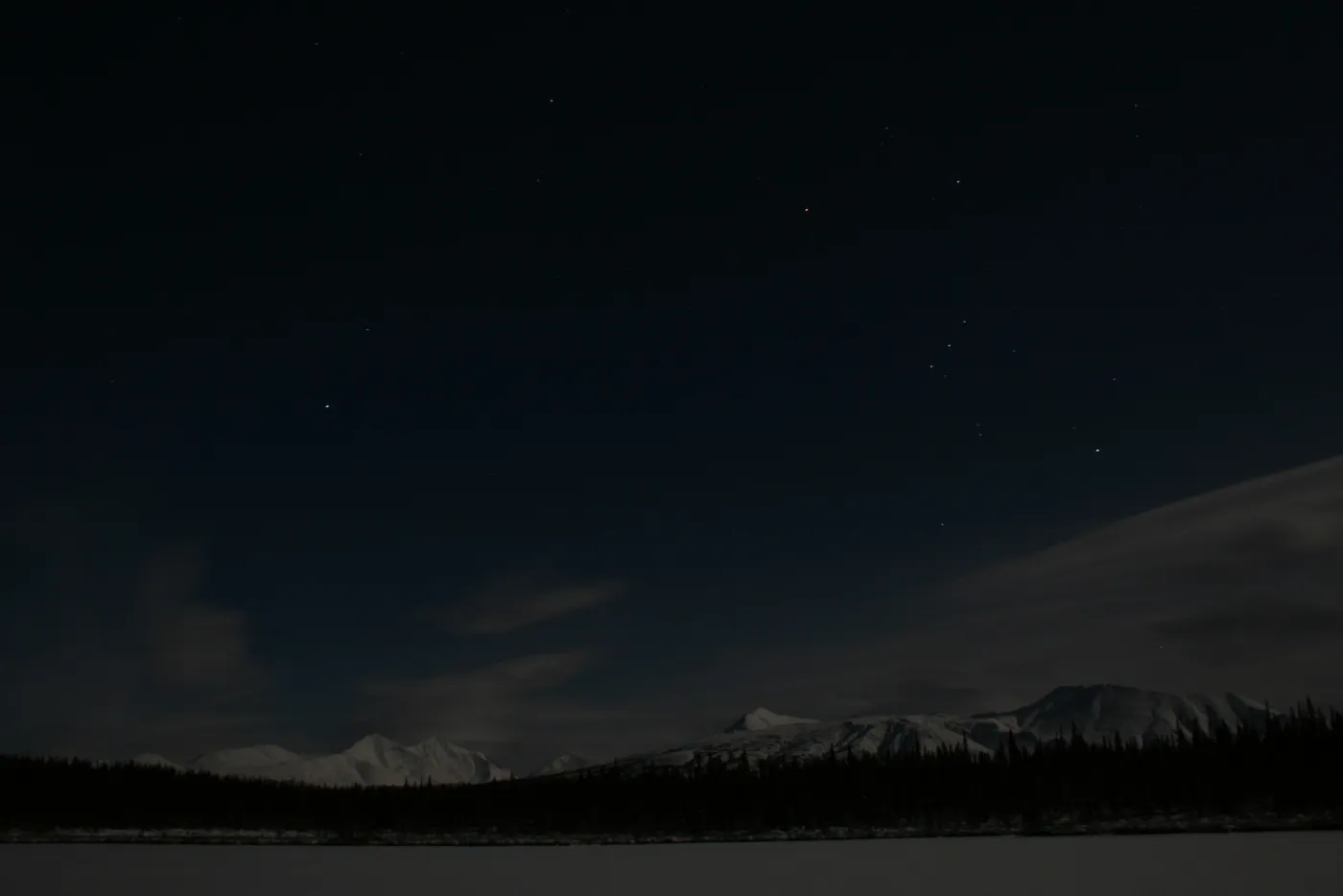
The night it finally happened
After several nights of that, the forecast came up to 4. And there it was. Not a great curtain sweeping overhead, just a quiet, pale-green glow. But it was the first aurora I had ever seen with my own eyes, and the cold simply vanished.
I went scrambling for a better view. Seventy sled dogs woke to the sound of my boots and started barking. There was only one thing to do. I crouched in a corner and waited them out, grinning in the dark, while the sky glowed above the trees.
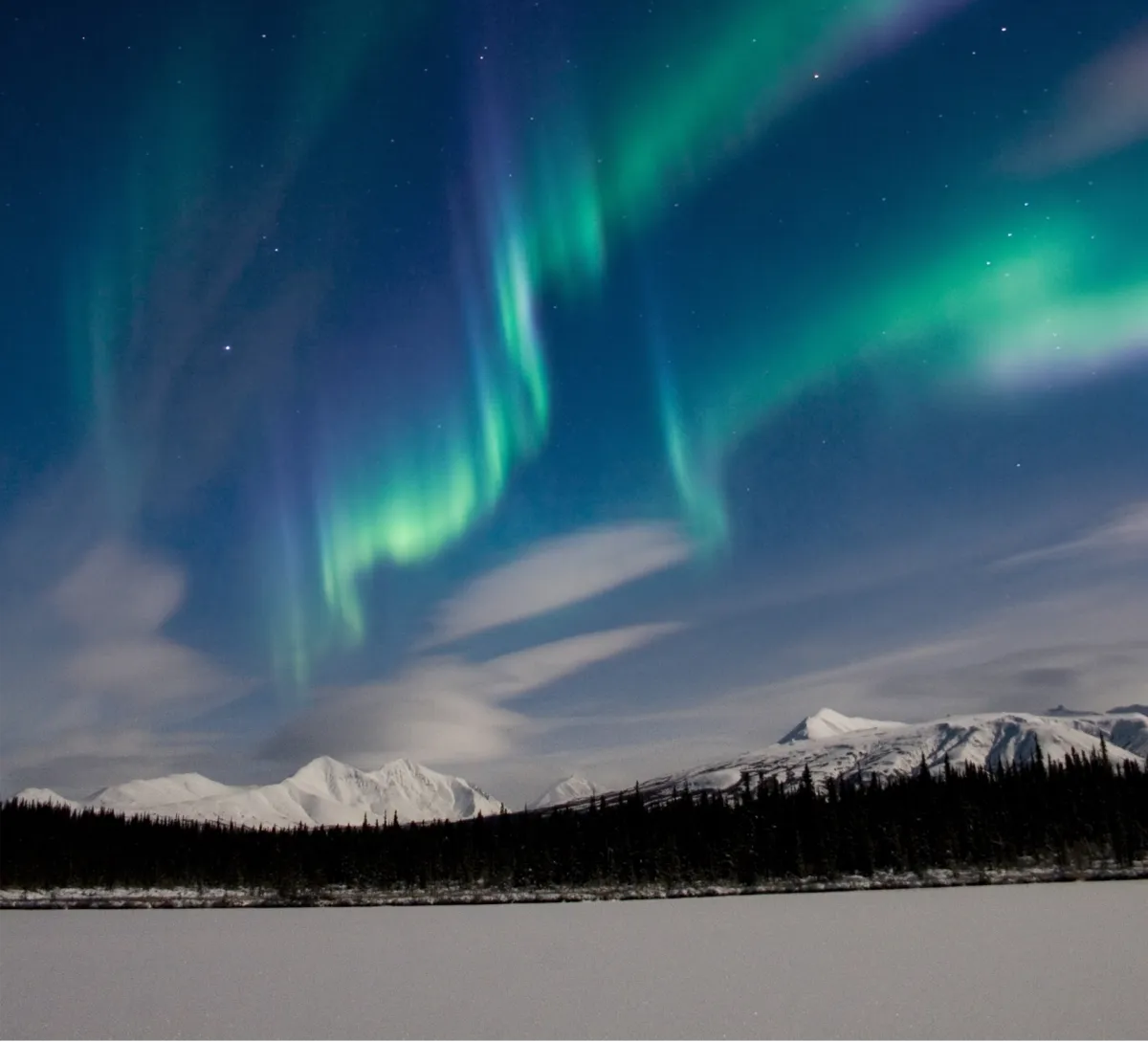
“A young man, three in the morning, alone in an Alaskan forest. Crouched in a corner to dodge the sled dogs, wide awake on the thrill of his first aurora.”
Waiting for the stars to move
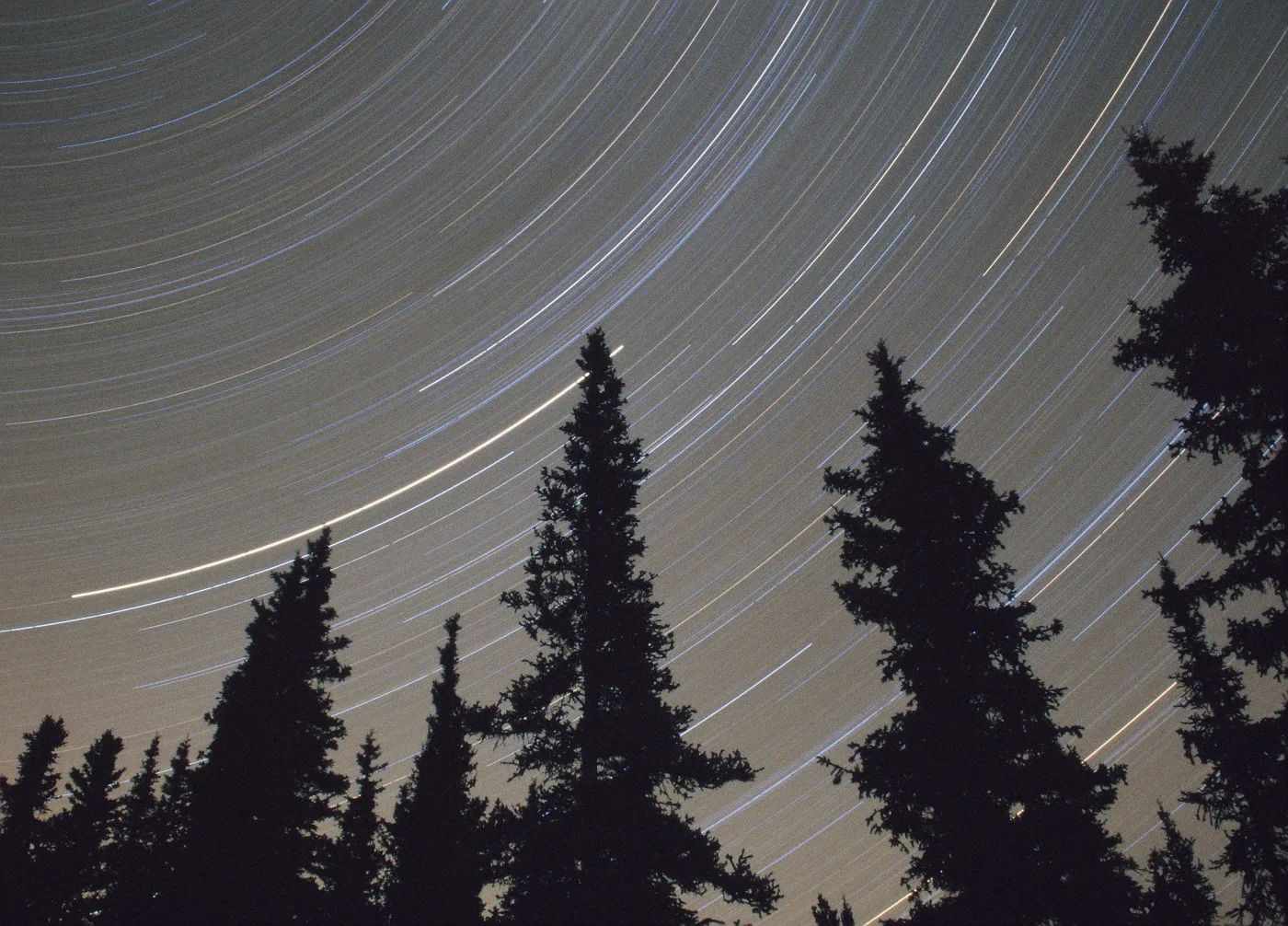
Some nights I turned the camera on the stars instead. Two or three hours with the shutter open, waiting for the sky to move overhead, a cup of warm tea for company. The real payoff came weeks later, back home, the day I picked up the developed film and held it to the light. There it was. Exactly what I'd pictured, standing in the dark at twenty below.
That first pale glow is why I still care about knowing, ahead of time, which night to go out. The aurora rewards patience. But a good forecast is what turns a night of waiting into a night of watching.